

Information checked on 21 November 2026.
There is no universal SQE1 mock percentage that proves you will pass. A useful score comes from a clearly labelled attempt: the questions, timing and coverage tell you what the result can show. Read the percentage alongside your reasoning and completion pattern, then choose the specific correction your next attempt should test.
- Compare similar attempts before reading a trend.
- Keep raw practice percentages separate from official scaled scores.
- Review guesses as well as wrong answers.
- End each review with a specific task you can test.
Is there a mock score that means you will pass SQE1?
No universal provider-mock percentage can establish that you will pass the real assessment. Ask what a provider means by its suggested target, how its questions are selected and what evidence supports any predictive claim. A practice target can help organise your work without being an official pass mark.
The SRA’s SQE1 marking guidance explains that each FLK has its own pass mark. The official results explanation distinguishes the number of correct answers from the scaled score: the pass point is 300 on a scale of 0–500. Dividing those numbers does not establish a universal raw percentage target.
Use your score to choose the next question about your preparation. Did you finish? Were the questions unfamiliar? Did the set cover the material you need to rehearse? Those checks make a percentage more informative without pretending to turn it into a forecast.
Watch the SRA explain official result scores
The SRA’s results-page explainer helps separate official marks from practice percentages. Use it alongside the current written results guide; it does not validate a provider’s mock prediction.
Check what the attempt actually measured
For January 2027 onwards, the confirmed format is 170 questions per FLK, in two sessions of 85. Standard time remains 2 hours 33 minutes per session. Subjects are allocated to particular sessions, with questions mixed within those groups; ethics remains pervasive.
Before comparing scores, record the following:
- Question exposure: fresh, partly familiar or repeated.
- Conditions: timed, untimed, interrupted or completed with notes.
- Coverage: a targeted topic set, a session group or a full paper.
- Completion: how many answers you reached independently before time stopped.
- Scope limits: any subjects or question types the resource leaves out.
A small topic quiz can check a recent correction. It cannot do the same job as a longer mixed exercise. Keep both in your record, but give them different labels. Where you have approved assessment arrangements, use conditions appropriate to those arrangements when rehearsing.
An example: three percentages, three different meanings
This invented practice log illustrates the review method; it is not a student result or a recommended pass threshold.
| Attempt | Result | Conditions | Useful next question |
|---|---|---|---|
| A | 24/30, 80% | Repeated topic questions, untimed | Can I apply the repaired rule to new facts? |
| B | 56/85, about 66% | Fresh mixed session, timed; rushed finish | Where did I lose time? |
| C | 60/85, about 71% | Fresh mixed session, timed; finished | Which errors remain, and is the change repeatable? |
Attempt A has the highest percentage, but familiarity changes what it demonstrates. The rise from B to C is worth investigating, rather than declaring a breakthrough. Different questions may expose different gaps. Check what changed in your approach, and whether later comparable work shows the same improvement.
The useful record is the explanation beside the score. If B involved repeatedly rereading long stems, choose a reading drill. If the difficulty was an unfamiliar rule, choose clarification and application practice. The same percentage can lead to different next steps.
Should you average different mock scores?
Start by checking whether the attempts are comparable. Averaging the first two rows of the example would combine a repeated untimed topic set with fresh timed mixed work. The arithmetic can be correct while the summary is unhelpful for a decision.
There is also a denominator problem. In the example, the first two attempts contain 24 correct answers out of 30 and 56 out of 85. Combined, that is 80 out of 115, about 69.6%. The simple average of their percentages is about 72.9%. They differ because the sets have different lengths. Neither figure resolves the difference in conditions.
For a useful comparison, group attempts by purpose: targeted learning checks, unfamiliar mixed practice and longer timed rehearsal. Within a group, keep the conditions as consistent as practicable. Then inspect the reasoning and recurring errors beside the score. This gives you a record you can discuss without relying on an attractive but poorly defined overall average.
Review the answers without rebuilding the whole course
Our suggested review routine starts with a short classification. Record why you chose an answer before reading its explanation, where your resource allows. Then compare that reasoning with the explanation and your checked learning material.
- Rule gap: you did not know the relevant principle. Identify the precise point to learn.
- Application gap: you knew the rule but missed a fact or condition that changes the answer. Explain that link in a sentence.
- Reading or task error: you answered a nearby question, overlooked a qualification or lost track of the person involved. Write the overlooked detail.
- Execution problem: you spent too long on one question or rushed later decisions. Locate where the problem began.
- Uncertain correct answer: you chose correctly but could not justify it. Keep it in the review pile.
These are practical review labels to help you choose the next task. If more than one fits, name the part you can act on first. Replace “revise trusts” with the particular distinction you could not apply, then return to a different question to test it.
Turn one mistake into a review entry you can close
A useful error-log entry contains enough detail to test a correction later. “Read more carefully” is difficult to act on. “I answered whether an option was possible when the task asked for the best next action” identifies something you can check.
Here is a suggested format, using an illustrative reading error rather than a legal worked answer:
- What I selected: the option I could justify in general.
- What I missed: the task’s request to choose the best response to these facts.
- Correction to try: restate the requested decision in a few words before comparing options.
- Fresh check: a different question where several answers initially appear plausible.
- Review outcome: whether my reasoning addressed that task, and anything still unclear.
Keep the first attempt and the corrected explanation separate. Otherwise, when you look back, you may see a polished answer without remembering the original difficulty. Close the entry when you have a reason to do so from later work, rather than simply because you reread the note. If the error returns, reopen or refine the entry instead of treating it as a new unrelated failure.
Use a decision flow to choose the next task
- Can you explain the rule?
If not, clarify it using checked learning material or a specific question to a tutor.
- Can you connect it to the facts?
If the rule is clear, identify the detail that made your choice succeed or fail.
- Can you repeat the decision under the intended conditions?
Choose a fresh task that tests the correction, adding timing where that is the issue.
- What does the new attempt change?
Keep the correction, refine it or ask for help with the point still unresolved.
For example, high repeat scores combined with uncertain fresh answers point you towards new facts and recorded reasoning. Accurate early work followed by a rushed ending gives you a different question: where was time spent, and what happened to later decisions?
Choose one or two changes for the next exercise. Preserve the remaining issues in a backlog, and give priority to recurring problems you can describe clearly. Keep separate records for FLK1 and FLK2 so that a stronger result does not hide the other paper’s needs.
When to use another mock, and when to ask for feedback
Another full mock is useful when you have a reason to rehearse the longer task again. First ask what you changed after the last one. If the answer is only “I need a better score”, a targeted exercise or an explanation may be the more useful next step.
Bring a small evidence pack to a tutor discussion: the conditions, your chosen answers, the reasoning you recorded and the correction you tried. Ask a specific question, such as why a particular fact makes one option better. That makes the conversation easier to act on than asking whether a percentage is good enough.
For rehearsal options, use our SQE1 mocks page. Keep your own record alongside the readiness checklist; use the checklist to organise preparation rather than calculate a probability of passing.
Frequently asked questions
Is 70% in an SQE1 mock enough to pass?
It is a practice result, not an official prediction. Check question familiarity, timing, coverage and the basis of any provider target before deciding what to do next.
Can I compare scores from different SQE question providers?
Keep their results separately labelled. Different question selection, coverage and conditions can make a direct percentage comparison misleading; compare the errors and reasoning as well.
Why do my mock scores drop when I use fresh questions?
Familiar wording may have helped earlier attempts. Review the new errors to identify whether the difficulty involves knowledge, application or execution rather than assuming one cause.
How many mocks should I take before SQE1?
There is no fixed number that establishes readiness. Choose the next attempt to test a correction, rehearse conditions or investigate a gap, and protect time for reviewing it.
Should I count an answer I guessed correctly as secure knowledge?
Keep the mark in the score, but label the answer as uncertain for review. Try explaining the reasoning and applying it to unfamiliar facts before treating the point as secure.
Related FQPS resources
Sources
Stay up to date
Never miss the latest SRA updates. Receive product updates, news and customer stories right into your inbox.

Keep reading
Understand the SRA consultation, compare the current assessment rules and work through the practical decisions facing candidates planning their next SQE sitting.
Read the article
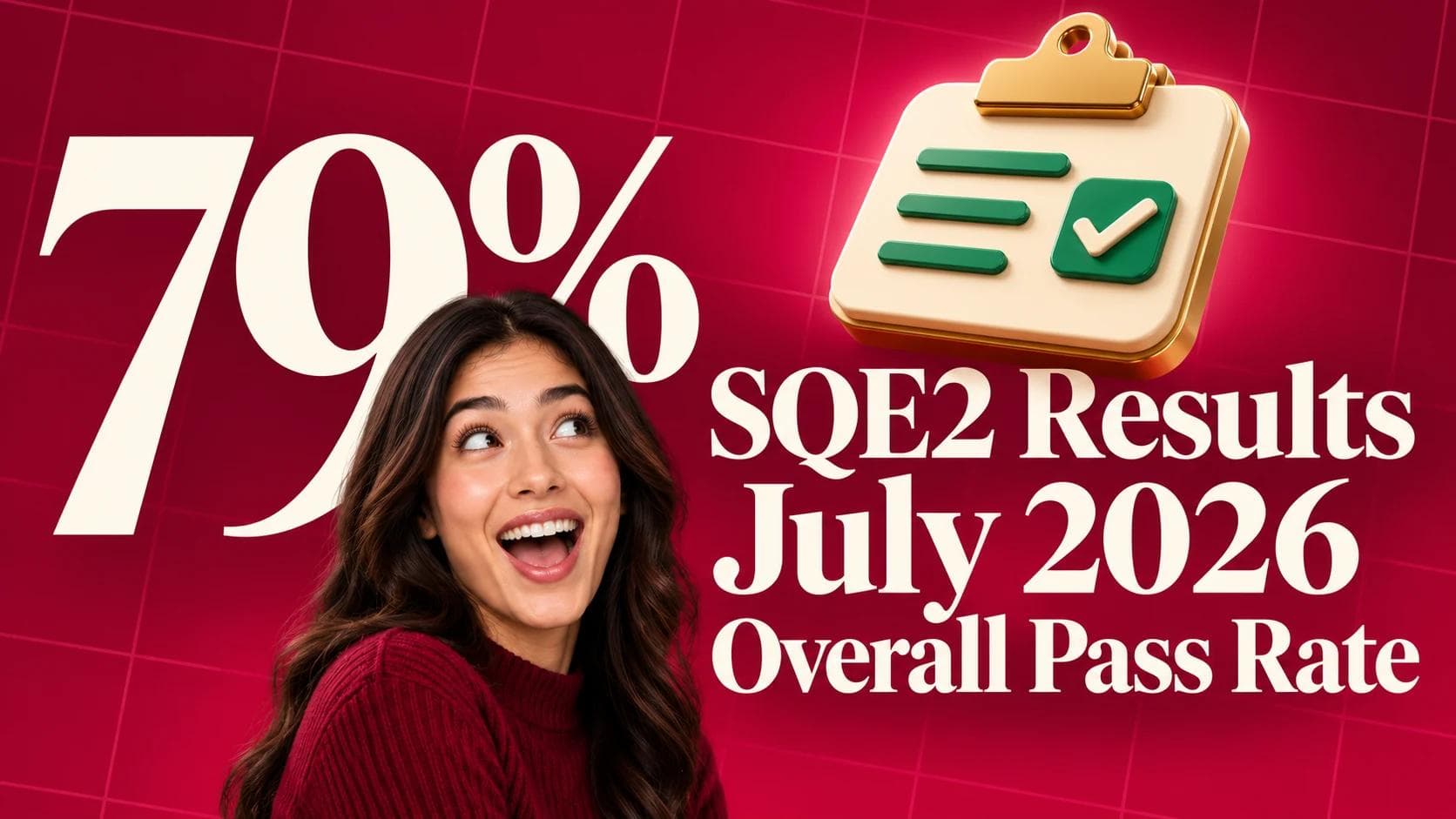
The July 2026 SQE2 results are out. Read the official pass rates, make sense of your marks and check the urgent January resit deadline for this cohort.
Read the article
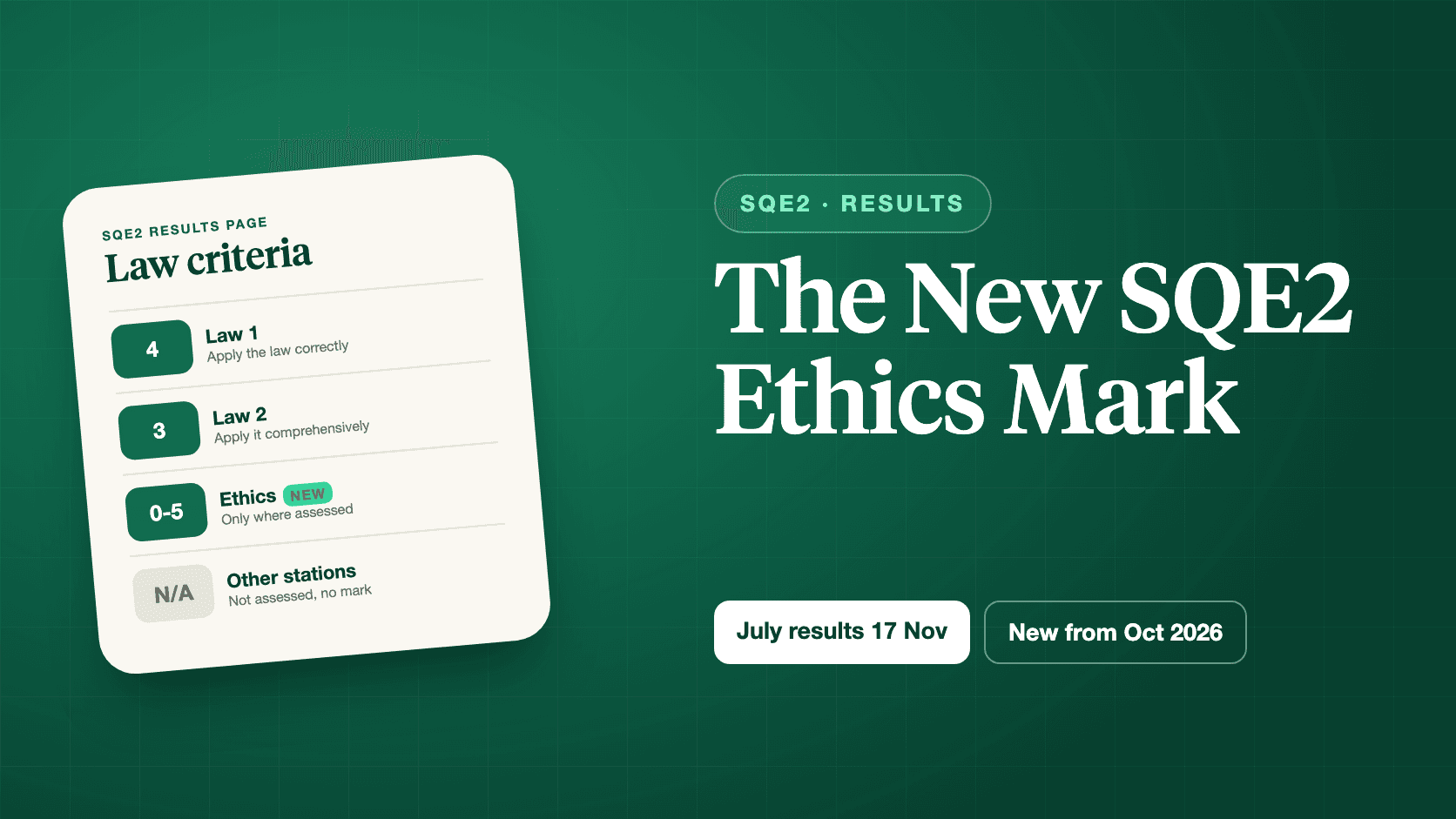
July SQE2 results arrive on 17 November in the old format. From the October 2026 sitting, a separate ethics mark appears. Who sees what, and how it adds up.
Read the article