SQE2 July 2026 Results: 79% Pass Rate and Next Steps

Information checked on 19 November 2026.
The July 2026 SQE2 results were released on 17 November, alongside the official statistical report. If you are reading your result today, start with two things: your individual performance breakdown and the next administrative deadline. For July candidates considering a January resit, the seat reservation deadline is 20 November 2026, at 5pm UK time.
- Overall pass rate: 79% across 1,151 graded candidates.
- First-attempt pass rate: 80% across 989 candidates.
- Review the detailed marks before rebuilding your study plan.
- Checked on 19 November 2026; all booking times below are UK time.
What the July 2026 SQE2 results show
The SRA statistical report records a mean scaled score of 328.5 and a median of 330. The passing scaled score was 300. The overall SQE2 pass rate includes resitters; the first-attempt figure refers to candidates taking this assessment for the first time. Keep those groups separate when comparing headlines.
These are cohort results. They cannot tell you why a particular candidate passed or failed, or predict what a different preparation plan will achieve. Use the report for context and your own marks for decisions.
The results announcement confirms that candidates were emailed to check their SQE account. The statistical report supplements your personal result; it does not replace it.
How to read your scaled score and station marks
The official results guide explains that your scaled score is expressed out of 500, with 300 required to pass. That does not mean the raw percentage pass mark is 60%: conversion takes account of assessment difficulty. Your quintile shows where your score sits within five performance groups, rather than adding another pass requirement.
There is a single overall pass outcome across the assessment. One disappointing station does not automatically determine that outcome. The SQE2 marking guidance explains how skills and application of law contribute equally to station scores, and how station totals contribute to the overall result.
For revision, ask a more useful question than “Was this station bad?”: was the difficulty identifying the law, applying it to the facts, organising the answer or delivering the task? Your breakdown can help you choose what to investigate in your next practice exercise.
For historical statistical reports and links to other sittings, use the FQPS SQE results guide.
A practical review routine
The following is our suggested study routine. It is a way to turn feedback into a manageable plan, rather than an official scoring method.
- Make a small review sheet. Create columns for the station, the weaker criteria, your likely explanation and the next exercise. Keep the explanation provisional. A number alone cannot establish whether you misunderstood a rule or ran out of time.
- Look for repetition. Several weaker legal-writing performances suggest a different practice priority from one isolated difficulty in a particular topic. Highlight patterns that recur across tasks before rewriting your whole timetable.
- Choose one observable change. Replace “improve drafting” with an action you can check: identify the document’s purpose before writing, complete a structure first or reserve time to check defined terms. Choose the action that fits your own feedback.
- Rehearse under a clear constraint. Try a fresh task with a fixed time limit. Afterwards, check whether the chosen change appeared in your work and whether it helped. Keep the answer and review notes together so that your next session starts from evidence.
- Set a review point. After several exercises, decide whether the pattern is improving. If it is not, bring specific examples to a tutor rather than simply adding more questions to the week.
For example, “I missed the client’s requested outcome in two writing tasks” gives you a concrete focus. In the next task, write that outcome at the top of your planning notes, then check that the final advice answers it. This keeps the exercise tied to an identifiable problem.
Keep stronger areas in the rotation too. A targeted plan should change the balance of your practice without leaving whole tasks untouched. Our SQE2 readiness checklist can help organise that review.
July candidates: the January 2027 resit deadline
If you did not pass and want a SQE2 January 2027 resit, use the dedicated booking instructions for July candidates. Complete the pre-booking steps and return your seat reservation form by 5pm on 20 November 2026. Candidates requesting reasonable adjustments also need the form; adjustment applications must be submitted and accepted by 20 November.
Payment requests are sent between 10am on 21 November and 5pm on 2 December. You must pay within 48 hours of receiving your email or your seat will be cancelled. Put the email-checking task in your diary alongside the reservation deadline.
For later booking options, follow the official instructions linked above.
Choose the next step that matches your result
If you passed, use the SRA’s admission checklist to work through your remaining requirements. Passing SQE2 does not by itself complete admission.
If you are considering another attempt, separate the booking decision from the study review. Check the administrative requirements promptly, then build a realistic timetable around work, feedback and fresh timed practice. For support with that plan, explore FQPS SQE2 preparation and decide which form of practice would address the gaps you identified.
Frequently asked questions
When were the July 2026 SQE2 results released?
Results were released on 17 November 2026. Candidates were emailed to check their SQE account.
What was the July 2026 SQE2 pass rate?
The overall pass rate was 79%; the first-attempt pass rate was 80%.
What score do you need to pass SQE2?
A scaled score of 300 out of 500. It is not a fixed raw pass mark of 60%.
Can July 2026 SQE2 candidates resit in January 2027?
Eligible candidates must follow the dedicated cohort booking process. The seat reservation form deadline is 5pm UK time on 20 November 2026.
Related FQPS resources
Official sources
Stay up to date
Never miss the latest SRA updates. Receive product updates, news and customer stories right into your inbox.

Keep reading

Understand the SRA consultation, compare the current assessment rules and work through the practical decisions facing candidates planning their next SQE sitting.
Read the article
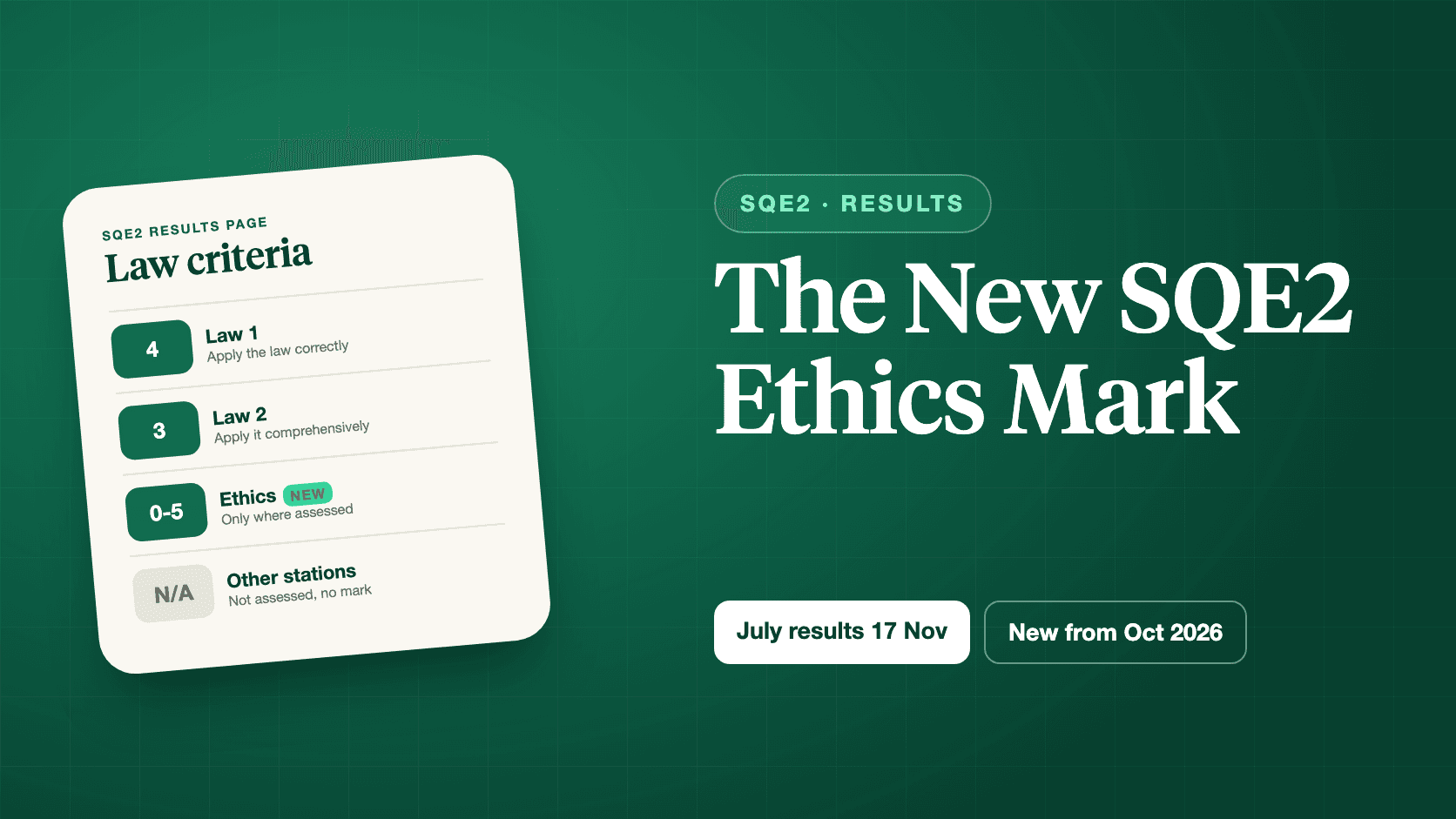
July SQE2 results arrive on 17 November in the old format. From the October 2026 sitting, a separate ethics mark appears. Who sees what, and how it adds up.
Read the article

No law degree, no training contract, and maybe no degree at all. How career changers qualify through the SQE, what the SRA data shows, and how to prepare.
Read the article