SQE or Bar-at-Law
SQE or the Bar course (Bar-at-Law) from overseas
They lead to two different professions, so choose by where you want to practise. If your aim is to enrol as an advocate in Pakistan, Bangladesh or Sri Lanka, the local rules name barristers and not solicitors, and the SQE does not replace the Bar course. If your aim is to be a solicitor of England and Wales, the SQE is the route, and most of it can be done without moving to England.
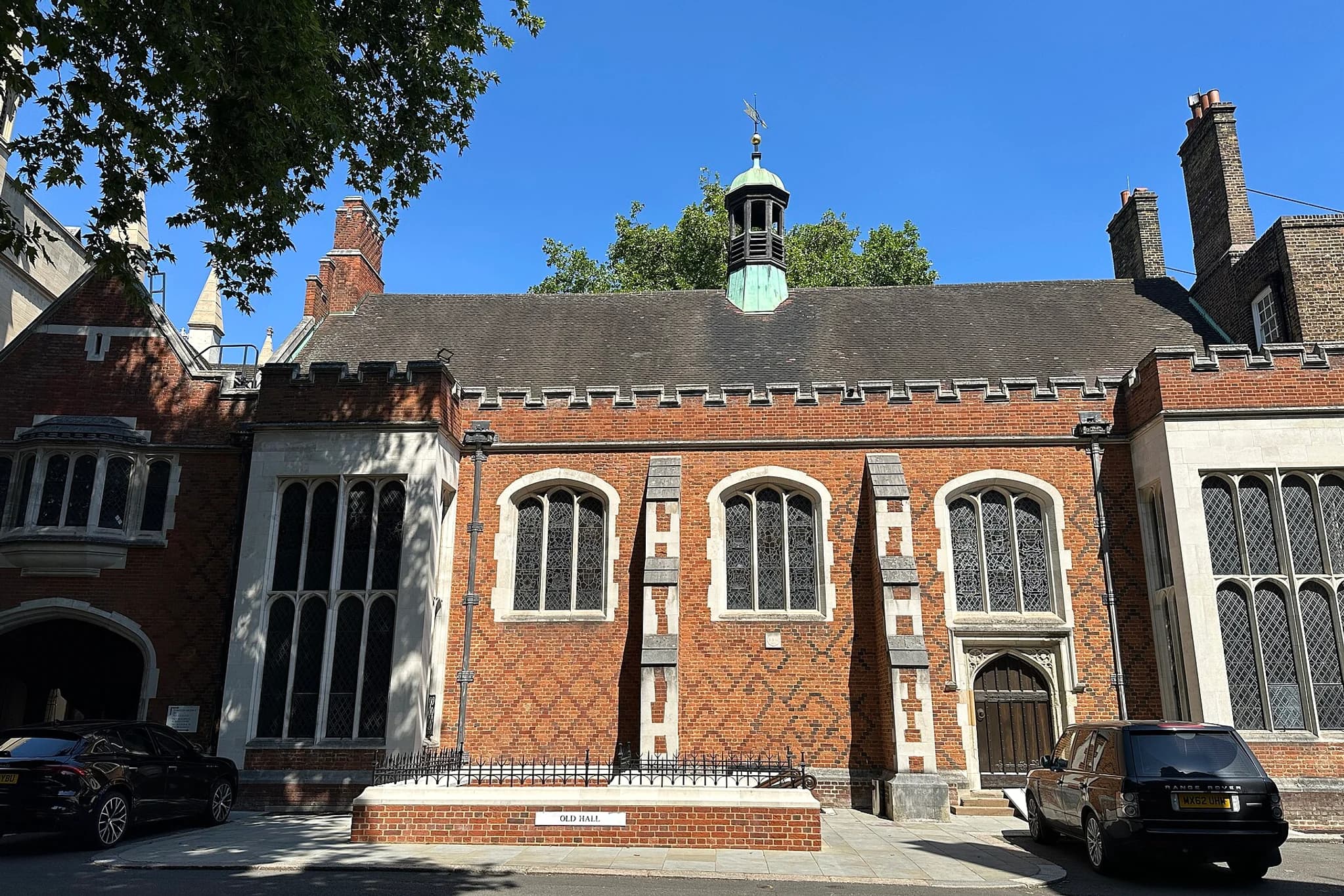
- 21
- sites where the Bar course is taught, at 10 providers, all in England and Wales (Bar Standards Board, June 2026)
- 10
- qualifying sessions at an Inn of Court before call to the Bar (Bar Standards Board)
- £13,550
- lowest Bar course fee at UK rates for 2026/27 entry; the highest is £19,950 (Bar Standards Board)
- £5,092
- SQE1 and SQE2 assessment fees together from September 2026, before any preparation (SQE cost page)
SQE or Bar-at-Law: which one do I need?
Facts checked against the regulators’ own pages. Last updated .
- A barrister and a solicitor are different professions with different regulators. The Bar course and call by an Inn make you a barrister. The SQE route makes you a solicitor of England and Wales. Neither is a stage of the other.
- To enrol as an advocate at home, look at the local rule. Pakistan’s 1973 Act and Bangladesh’s 1972 Order name barristers and do not mention solicitors, and Sri Lanka Law College has a shortened route for barristers only. The SQE does not replace the Bar course there.
- To be a solicitor of England and Wales, wherever you then work, the SQE is the route. SQE1 and the SQE2 written papers can be sat at listed centres abroad, and only the SQE2 oral assessments must be taken in England or Wales.
- The Bar course is taught at 21 sites, all in England and Wales, and call to the Bar needs ten qualifying sessions at an Inn.
- Bar course fees for 2026/27 run from £13,550 to £19,950 at UK rates, tuition included. The SQE assessment fees total £5,092, with preparation extra. The two figures are not like for like.
- After call, practice at the English Bar needs pupillage. On the solicitor route there is no pupillage: you need two years of qualifying work experience, which can be gained overseas and must be confirmed by an English solicitor.
The Bar course and the SQE, side by side
Two professions, two regulators: the Bar Standards Board for barristers and the Solicitors Regulation Authority for solicitors. The table sets out what each route asks and what each gives.

| Question | Bar course and call by an Inn (Bar-at-Law) | SQE route (solicitor of England and Wales) |
|---|---|---|
| What it makes you | A barrister, called to the Bar by one of the four Inns of Court once the course is passed and ten qualifying sessions are complete. | A solicitor of England and Wales, admitted by the Solicitors Regulation Authority after SQE1, SQE2, two years of qualifying work experience and a character check. |
| Published cost | Bar course fees for 2026/27 entry run from £13,550 to £19,950 at UK rates. Overseas rates in the same Bar Standards Board table include £14,500 at one provider and £24,700 at another. Tuition is included. Inn sessions are charged separately. | Assessment fees of £2,006 for SQE1 and £3,086 for SQE2, £5,092 in all, the same at every centre. Preparation is extra. |
| Where you must be | In England or Wales for the taught course: all 21 authorised sites are there. Lincoln’s Inn, the one Inn we checked, requires at least two of the ten sessions in person. | At a Pearson VUE centre for SQE1 and the SQE2 written papers, which includes listed cities abroad. In England or Wales only for the SQE2 oral assessments, over two consecutive days. |
| What it is worth at home | Named in the admission rules of Pakistan, Bangladesh and Sri Lanka and in Malaysia’s Legal Profession Act. A barrister still has to meet the local conditions. | Not named in the rules of Pakistan, Bangladesh or Sri Lanka. Listed by title in Malaysia, but not confirmed for solicitors who qualified through the SQE. |
| What comes after | Pupillage, for anyone who wants to practise at the Bar of England and Wales. The Bar Standards Board reports that most students who were domiciled overseas before the course do not appear to seek it. At home, the local training and examinations. | No pupillage. Two years of qualifying work experience, which can be gained overseas, before, during or after the exams, and must be confirmed by a solicitor of England and Wales. |
Sources: Bar Standards Board, Bar Training 2026, Bar Standards Board, the vocational component, SQE costs and fees and SRA, the SQE route.
What each English title is worth at home, country by country
Each row is the local admission rule as published, read on 12 November 2026. Where a rule says nothing about solicitors, the table says so.
| Country | Barrister | Solicitor of England and Wales | What a barrister still has to do |
|---|---|---|---|
| Pakistan | Section 26 of the Legal Practitioners and Bar Councils Act 1973 lists "he is a Barrister" as a qualification for admission as an advocate, as an alternative to a recognised law degree. | Not mentioned in section 26. A solicitor needs a law degree recognised by the Pakistan Bar Council, like any other applicant. | Be a citizen, or come within the reciprocity rule for resident foreign nationals, and complete the Bar Council’s training and examination unless exempt. Rule 108-I exempts a barrister who, after call, completed a full year’s training with a senior counsel in England. |
| Bangladesh | Article 27 of the Bangladesh Legal Practitioners and Bar Council Order 1972 lists "he is a barrister" beside a recognised law degree. | Not mentioned in article 27. A solicitor relies on a law degree that the Bar Council recognises. | Be a citizen and pass the examination the Bar Council prescribes. The article contains no exemption for barristers. |
| Sri Lanka | Sri Lanka Law College’s exemption policy names "Barristers from England, Scotland, and Ireland" for a shortened route. | Not mentioned in the policy or in the College’s 2026 admission guidelines. | Be a citizen, take seven named subjects, attend the Practical Training Course and serve an apprenticeship of at least six months. |
| Malaysia (High Court in Malaya) | Section 3 of the Legal Profession Act 1976 makes a "barrister-at-law of England" a qualified person. | The Legal Profession Qualifying Board’s list includes "Solicitor of the Senior Courts of England and Wales", effective 1 October 2009. We found no statement from the Board on whether that covers solicitors who qualified through the SQE. | Be a citizen or permanent resident, serve nine months of pupillage in Malaysia, and pass or be exempted from the Bahasa Malaysia Qualifying Examination. |
- A recognised law degree is the other doorIn Pakistan and Bangladesh "barrister" is one qualifying status and a law degree from a university the Bar Council recognises is another. A graduate with such a degree can apply without either English title, subject to the local examinations. Ask the Bar Council about your own degree.
- One Pakistani rule may reach a practising solicitorRule 108-I(4) exempts from the local training and examination an applicant who was enrolled as a practising lawyer outside Pakistan and practised there for a full year, to the satisfaction of the Enrolment Committee. On our reading that wording is wide enough to include a practising English solicitor. The rule does not name solicitors, the Committee decides, and it is an exemption from training, not a substitute for a recognised law degree.
- Malaysia is the exception in this groupBoth English titles are on the Board’s list. The solicitor entry dates from 2009, before the SQE existed, so anyone relying on it after qualifying through the SQE should get the Board’s confirmation in writing first.
Each country has its own guide: Pakistan, Bangladesh, Sri Lanka and Malaysia. Sources: Pakistan, Legal Practitioners and Bar Councils Act 1973, Pakistan Bar Council, Legal Practitioners and Bar Councils Rules 1976, Bangladesh Legal Practitioners and Bar Council Order 1972, article 27, Sri Lanka Law College, curriculum and exemptions, Malaysia, Legal Profession Act 1976 and Legal Profession Qualifying Board, qualified persons.
What the Bar course asks of an overseas student
The figures are the Bar Standards Board’s, from its report "Bar Training 2026", published in October 2026.
- FeesFor 2026/27 entry the published fees run from £13,550 to £19,950 at UK rates, including the Board’s own fee. Some providers charge overseas students a different rate: the table shows £14,500 at one and £24,700 at another. Others charge everyone the same, between £15,960 and £18,260. The Board took the figures from provider websites in May 2026.
- PlaceAs of June 2026 the course is authorised at 10 providers across 21 sites, and every site in the Board’s table is in England or Wales.
- Online studyWe found no course in that table that is delivered wholly online. That is our reading of the table: the Board does not say it in one sentence. The Board allows a course to be taken in two parts, one of which may be self-study, and the Inns of Court College of Advocacy describes its first part as studied online and its second as taught in person at the Inns of Court.
- An InnYou join one of the four Inns of Court before the course starts and complete ten qualifying sessions. The Inn calls you to the Bar once the course is passed and the sessions are done.
- Sessions in personWe checked one Inn. Lincoln’s Inn requires the ten sessions within five years ending on call, at least two of them interactive, and says interactive sessions can only be completed in person. Its 2026/27 prices include £13 for an online or hybrid lecture, £26 for an Advocacy and Ethics Day (two sessions) and £138 for a residential weekend (six sessions). We did not check the other three Inns.
- After callThe Board reports that most students who were domiciled overseas before the course do not appear to seek pupillage in England and Wales afterwards. For that group Bar-at-Law is a qualification taken home, and its value is whatever the admission rule at home gives it.
- Your degreeThe University of London says the Bar Standards Board recognises its LLB for the academic component of Bar training, provided certain criteria are met. Ask the University which criteria apply to you.
Sources: Bar Standards Board, Bar Training 2026, Bar Standards Board, the vocational component, Inns of Court College of Advocacy, Bar course, Lincoln’s Inn, qualifying sessions and University of London, LLB programme specification 2026-27.
What the SQE asks of the same student
Two exams, one trip to England or Wales, and two years of legal work that can be done at home.
- Fees£2,006 for SQE1 and £3,086 for SQE2 for sittings from September 2026, paid by card in full at booking. A resit is charged again: £1,003 for one SQE1 paper, £3,086 for SQE2.
- PlaceSQE1 and the SQE2 written papers are sat at Pearson VUE centres. The SRA’s list of cities it aims to include has Kuala Lumpur, six Indian cities, Abu Dhabi and Dubai, and no city in Pakistan, Bangladesh or Sri Lanka. The list is illustrative, and the cities for each sitting are confirmed when booking opens.
- The one fixed tripEvery SQE2 candidate travels to England or Wales for two oral days, in London, Cardiff, Manchester or Birmingham, within the window that also holds the written papers.
- AttemptsThree at FLK1, three at FLK2 and three at SQE2, with six years from your first sitting to pass everything.
- DegreeAny subject, shown to be equivalent to a UK degree. It is needed for admission, not to sit the exams.
- Work experienceTwo years full time, or the equivalent. It can be gained in your own country, in up to four organisations, paid or unpaid, and it need not involve English law. A solicitor of England and Wales or a compliance officer for legal practice must confirm it. A local advocate or a barrister cannot, unless that person is also a solicitor.
- If you are already enrolled at homeQualified lawyers need no qualifying work experience and can apply for an individual SQE2 exemption. The SRA asks for 18 months of practice from advocates of Pakistan and of Bangladesh (Dhaka) and from attorneys-at-law of Sri Lanka, and 15 months from Malaysian advocates and solicitors. SQE1 still has to be sat.
For the two oral days, GOV.UK lists taking an exam among the things a Standard Visitor can do. The Immigration Rules do not name the SQE, so check the Standard Visitor page for your own nationality. Living in England to study the Bar course raises a different immigration question, which this page does not cover.
Next on the solicitor side: how qualifying work experience works, QWE confirmation for overseas work, the SQE2 exemption finder and the rules for every overseas candidate on sitting the SQE from outside the UK. Sources: SQE1 and SQE2 written locations, SQE2 oral locations, SQE resits, SRA, qualifying work experience and SRA, SQE exemptions by jurisdiction.
Choosing by where you want to practise
Start from the place and the work, then take the title that the rules there name.
The courts at home
For enrolment as an advocate in Pakistan or Bangladesh, or admission in Sri Lanka, the local rules name barristers and not solicitors. The SQE does not replace the Bar course here. A law degree the Bar Council recognises may get you there without either title.
A solicitor of England and Wales
The SQE is the route and the Bar course is not, whether you then work in England, in the Gulf or at an international firm. SQE1, the SQE2 written papers and the two years of work experience can all be done outside England. The oral assessments cannot.
Dubai and the Gulf
Dubai’s rules for legal consultants ask a foreign graduate for a law qualification and "valid professional membership" in the jurisdiction where they are authorised to practise. They do not name England and Wales. Our reading is that admission as a solicitor, with a current practising certificate, is membership of that kind. A non-UAE national who graduated outside the UAE also needs three years of continuous legal experience, a UAE residence permit and a job with a licensed firm, and consultants cannot plead in the Dubai Courts. The DIFC Courts register practitioners from either branch who meet their advocacy experience thresholds.
Already an advocate at home
You do not need the Bar course to add the English solicitor title. Pass SQE1, then pass SQE2 or apply for the individual exemption. A qualified lawyer is not asked for qualifying work experience.
The Gulf position is set out in the SQE in the UAE. Sources: the Government of Dubai Legal Affairs Department bylaws on advocates and legal consultants (Administrative Resolution No. 51 of 2022, in the source list) and DIFC Courts, registration of practitioners.
What the SQE costs, to set beside a Bar course fee
These are the SQE assessment fees and our own plan prices. Compare them with the Bar course fees above with care: a Bar course fee includes tuition, and neither figure includes travel or living costs.
Paid to the SRA, the same wherever you sit
- SQE1 assessment feeFLK1 and FLK2, paid to the SRA’s assessment provider when you book£2,006£2,006
- SQE2 assessment feeWritten and oral, paid when you book SQE2£3,086£3,086
- Both assessments£5,092£5,092
Preparing with FQPS
- FQPS SQE1 RevisionA month, no minimum term, cancel anytime£79£79
- FQPS SQE2 PreparationA month, includes 6 live 1:1 mocks with a solicitor£189£189
SRA fees are for assessments from September 2026. FQPS prices include VAT.
If the solicitor route is the one you choose
FQPS prepares candidates for the SQE only. We do not teach the Bar course, so take questions about that route to the Bar Standards Board and the Inns of Court.
Start free, from anywhere
One full FLK1 and one full FLK2 mock (2 × 85 questions each, January 2027 format), free on sign-up with no card.
Create a free account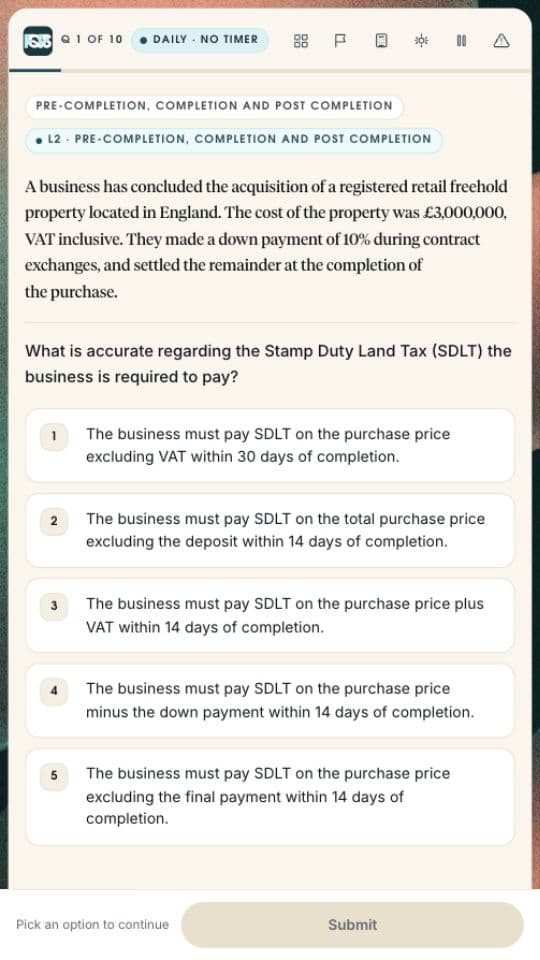
Study at your own hours
Revision cards for the whole SQE1 syllabus, 2,500+ practice questions, flashcards and full FLK1 and FLK2 mocks are there whenever you open the platform, on the web and in the mobile app.
The SQE1 courseA mentor who knows your route
Every paid plan includes a designated mentor and a personal study plan from Cleo, the FQPS study planner, built around your exam date.
How the mentor worksSee what the solicitor exam asks
SQE1 is two papers of single best answer questions on English law, FLK1 and FLK2. Work through some before you decide which profession’s exam you would rather sit.
SQE practice questionsSQE2 tests advocacy too
SQE2 assesses advocacy and client interviewing as well as writing, drafting, research and case analysis. Both FQPS SQE2 plans include live 1:1 mocks with a qualified solicitor, on the oral and the written stations, with written feedback.
The SQE2 courseWork experience gained at home
If no English solicitor works where you gained your experience, the SRA lets a solicitor outside the organisation confirm it after reviewing your work and hearing from your supervisor.
QWE confirmation for overseas workSQE1 preparation from £79 a month
5 plans, billed monthly with no minimum term. In your currency, that first plan is £79 a month.
A UK course with students well beyond the UK
FQPS is online from the first revision card to the last mock, so where you live changes your time zone and nothing else.
- 29
- countries our paying students’ cards were issued in, in the 12 months to November 2026
- 44%
- of those students paid with a card issued outside the UK
Lit: the UK and 14 of the other countries, among them France, United States, Singapore, Germany, South Korea, Türkiye.
Seven months of prep was plenty, and audiobooks made studying actually enjoyable.
 ClemenceNetherlands, read the review on Trustpilot
I received my results a few weeks ago and am thrilled to share that I passed!
 MarceauxMalaysia, read the review on Trustpilot
Honestly, it is value for money.
 Yosheel Bala BangarooCanada, read the review on Trustpilot
These are three of our reviews, chosen because the reviewers are outside the UK. Read every FQPS review on Trustpilot, good and bad. Country counts are from our payment records on .
When the SQE is the wrong choice of the two
We would rather you chose the right route than our course.
- Your aim is to enrol as an advocate in Pakistan or Bangladesh and you want an English professional title to do it. Section 26 of the 1973 Act and article 27 of the 1972 Order name barristers. They do not mention solicitors.
- Your aim is admission as an attorney-at-law in Sri Lanka. Sri Lanka Law College has a shortened route for barristers of England, Scotland and Ireland and none for solicitors.
- You want to be a barrister. The SQE does not make you one in any country: it is the assessment for a different profession.
- You qualified through the SQE to avoid Malaysia’s Certificate in Legal Practice. The solicitor entry on the Qualifying Board’s list predates the SQE, and we found no statement from the Board that it covers you.
- You are not a qualified lawyer and know no solicitor of England and Wales who could confirm two years of your work. Settle that before you pay an exam fee: the QWE checker is free.
- You cannot travel at all. The SQE2 oral assessments are in England or Wales, and from Pakistan, Bangladesh or Sri Lanka even SQE1 means a flight to a listed country.
SQE or Bar-at-Law: common questions
Your situation not here? A free 30-minute call with our team goes through your route and your dates.
Book a free callIs Bar-at-Law the same as barrister?
Yes. Bar-at-Law, or barrister-at-law, is the traditional name for a person called to the Bar by one of the four Inns of Court in England. Pakistan’s 1973 Act and Bangladesh’s 1972 Order use the word "barrister", and Malaysia’s Legal Profession Act 1976 says "barrister-at-law of England".
How much does Bar-at-Law in the UK cost?
The Bar Standards Board lists Bar course fees for 2026/27 entry from £13,550 to £19,950 at UK rates, and its table shows an overseas rate of £24,700 at one provider. Inn qualifying sessions are charged separately: at Lincoln’s Inn, for example, £13 for an online or hybrid lecture and £138 for a residential weekend of six sessions. Travel and living costs in England or Wales come on top.
Can I do the Bar course online from Pakistan or Bangladesh?
Not wholly, as far as we could find. Every site in the Bar Standards Board’s table of authorised providers is in England or Wales, and we found no course in it delivered entirely online. That is our reading of the table, not a statement by the Board. The Inns of Court College of Advocacy describes its first part as studied online and its second as taught in person, and Lincoln’s Inn, the one Inn we checked, requires at least two qualifying sessions in person.
SQE or bar exam: which should an overseas law graduate take?
The one for the profession and the country you want. For enrolment as an advocate in Pakistan or Bangladesh, or admission in Sri Lanka, the local rules name barristers and not solicitors, so the SQE does not replace the Bar course. To be a solicitor of England and Wales, the SQE is the route, and most of it can be done without moving to England.
Can an English solicitor enrol as an advocate in Pakistan or Bangladesh?
Not on the solicitor title. Section 26 of Pakistan’s Legal Practitioners and Bar Councils Act 1973 and article 27 of the Bangladesh Legal Practitioners and Bar Council Order 1972 both name barristers and do not mention solicitors. A solicitor would apply on a law degree that the Bar Council recognises and meet the same local examinations as other applicants.
Do I have to live in England to qualify as a solicitor?
The SRA’s admission criteria contain no UK residence or nationality requirement. SQE1 and the SQE2 written papers can be sat at listed centres abroad, and qualifying work experience can be gained overseas. The SQE2 oral assessments are the exception: two consecutive days in London, Cardiff, Manchester or Birmingham.
Is a barrister higher than a solicitor?
No. They are two separate professions with separate regulators, the Bar Standards Board for barristers and the Solicitors Regulation Authority for solicitors, and neither title is a senior version of the other. Which one carries more weight where you live depends on what the local admission rules name.
Do I need pupillage after the Bar course?
To practise at the Bar of England and Wales, yes: pupillage follows call by an Inn. The Bar Standards Board reports that most students who were domiciled overseas before the course do not appear to seek pupillage in England and Wales. At home the local rules apply instead. Pakistan, for example, exempts from its own pre-enrolment training a barrister who completed a full year’s training with a senior counsel in England after call.
Can work experience in my home country count towards qualifying as a solicitor?
Yes. The SRA says qualifying work experience can be gained overseas and need not cover English and Welsh law. You need two years full time or the equivalent, in up to four organisations, confirmed by a solicitor of England and Wales or a compliance officer for legal practice. A local advocate cannot confirm it unless that person is also an English solicitor.
Other routes to the English title
 SQE in PakistanNo test city in Pakistan, an 18-month SQE2 exemption for advocates, and a title that Pakistani law does not name.
 SQE in BangladeshSit abroad, apply through the SRA’s Dhaka advocate entry, and know what article 27 does and does not accept.
 SQE in Sri LankaNo test city at home, an SQE2 exemption route for attorneys-at-law, and what the title is not worth at Law College.All 15 international guidesWhere you can sit, what has to be done in the UK, and a guide for each country.
Sources for this page (27)
- Bar Standards Board: Bar Training 2026 (fees, providers and sites)
- Bar Standards Board: the vocational component
- Inns of Court College of Advocacy: Bar course
- Lincoln’s Inn: qualifying sessions
- Pakistan: Legal Practitioners and Bar Councils Act 1973
- Pakistan Bar Council: Legal Practitioners and Bar Councils Rules 1976
- Bangladesh: Legal Practitioners and Bar Council Order 1972, article 27
- Sri Lanka Law College: curriculum and exemptions
- Sri Lanka Law College: 2026 admission guidelines
- Malaysia: Legal Profession Act 1976 (Act 166)
- Legal Profession Qualifying Board, Malaysia: qualifications to be a qualified person
- Government of Dubai Legal Affairs Department: Administrative Resolution No. 51 of 2022
- DIFC Courts: registration of practitioners, guidelines
- University of London: LLB programme specification 2026-27
- SQE: costs and fees
- SQE: assessment locations
- SQE: SQE1 and SQE2 written locations
- SQE: SQE2 oral locations
- SQE: SQE2 assessment days
- SQE: resits
- SRA: the SQE route
- SRA: degree or equivalent
- SRA: qualifying work experience
- SRA: qualified lawyers
- SRA: SQE exemptions by jurisdiction
- SRA: Authorisation of Individuals Regulations
- GOV.UK: Standard Visitor
Each source was read on or before 12 November 2026. Rules change: check the regulator's own page before you act on anything here. This page is general information, not legal or immigration advice. FQPS Academy is an independent SQE preparation provider, not affiliated with or endorsed by the Solicitors Regulation Authority or Kaplan. The SQE and SOLICITORS QUALIFYING EXAMINATION trade marks are the property of and are used under licence from the Solicitors Regulation Authority.