 SQE for Indian lawyers
: exemption, cities and costs
An Indian advocate qualifies as a solicitor of England and Wales by passing SQE1 and then either passing SQE2 or being exempted from it. Six Indian cities are on the SRA’s list for SQE1 and the SQE2 written papers. The English title gives no right to practise Indian law: in India it supports foreign-law work only, under Bar Council of India rules.
- 6
- Indian cities on the SRA’s list for SQE1 and SQE2 written: Bangalore, Chennai, Gurugram, Hyderabad, Mumbai, New Delhi
- 2 yrs
- of legal work after qualifying as an advocate that the SRA asks for before it considers an SQE2 exemption
- 60 days
- a year a foreign lawyer may advise in India on foreign law without registering (Bar Council of India rules, 2025)
- ₹15,000
- per recurring card debit: above this the RBI asks for fresh authentication each time (e-mandate framework, 2026)
Can an Indian advocate become an English solicitor?
Facts checked against the regulators’ own pages. Last updated .
- Yes. You need a degree, a pass in SQE1, a pass in or exemption from SQE2, and to meet the SRA’s character and suitability rules. As a qualified lawyer you do not need two years of qualifying work experience.
- There is no agreed exemption for India. An advocate can apply for an individual SQE2 exemption: the SRA asks for proof of your AIBE pass (unless your law degree was completed before 2010), proof of your qualification with the Bar, and a reference showing two years of legal work since qualifying.
- SQE1 has to be sat. The SRA calls SQE1 exemptions "very rare" and has granted one since 2021.
- Bangalore, Chennai, Gurugram, Hyderabad, Mumbai and New Delhi are on the SRA’s list of cities for SQE1 and the SQE2 written papers. The SQE2 oral assessments are held only in England and Wales.
- The English title does not let you practise Indian law or appear in Indian courts. Under the Bar Council of India’s 2025 rules it supports foreign-law and international-law work, and doing that from inside India needs registration. An enrolled advocate keeps every Indian practice right.
- A law graduate who has not enrolled as an advocate takes the standard route: both SQE assessments and two years of qualifying work experience, which can be gained in India.
The SQE2 exemption for Indian advocates: the evidence
The SRA’s exemption finder, last updated 24 September 2026, lists "India / Advocate" as a qualification that can apply for an individual SQE2 exemption. This is what it asks you to send.
| Evidence | What the SRA asks for | Good to know |
|---|---|---|
| All India Bar Examination | Proof that you passed the AIBE. | Not asked for if your law degree was completed before 2010: proof of your professional qualification is then enough. |
| Professional qualification | Proof of your qualification with the local Bar: your admission certificate or a certificate of good standing. | At admission as a solicitor the SRA asks for a certificate of good standing less than three months old from every jurisdiction you are admitted in. |
| Work experience | A reference showing at least two years of legal work after you qualified as an Indian advocate. | The experience has to cover every SQE2 skill, so the reference should describe the work and not only the dates. |
| Your referee | Proof of the referee’s own professional qualification. | Collect it when you ask for the reference. |
| Fee and timing | £265, paid to the SRA. | The fee covers one or both exemptions. The SRA decides within 180 days of a complete application. |
| English | Shown separately if you are exempt from SQE2. | Either the qualification you rely on was assessed in English, or a Secure English Language Test no more than three years old, for example IELTS Academic UKVI at 7.5 overall. |
An individual application is decided on its own evidence. The SRA says that being eligible to apply does not mean the exemption will be granted, and that a refused applicant can reapply only with new evidence. The general conditions sit on top of the India entry: practising rights in at least one of criminal litigation, civil litigation, property practice, wills and probate or business organisations, and experience at the standard of a newly qualified solicitor. Sources: SRA, SQE exemptions by jurisdiction, SRA, applying for an SQE2 exemption and SRA, English or Welsh language proficiency.
- Apply before you book SQE2An advocate who has failed SQE2, or has sat it and is waiting for the result, can no longer be exempted from it. You can sit SQE1 while the application is pending.
- Plan to sit SQE1The SRA says there are significant differences between the law of England and Wales and that of every jurisdiction it has reviewed, so a legal system based on English law is not enough on its own.
- Under two years since you qualified as an advocateYou sit SQE2 like any other candidate, and that includes the oral assessments in England or Wales.
- The AIBE is recentThe Bar Council of India made it mandatory for law students graduating from the 2009-10 academic year onwards, so longer-standing advocates may never have sat it. Source: Bar Council of India, AIBE.
Our guide to applying for an SQE exemption takes the form step by step, and the SQE2 exemption finder shows the entry for every other jurisdiction, which matters if you are also admitted somewhere else.
SQE exam centres in India: six cities on the SRA’s list
On the list read on 12 November 2026, India has more cities than any other country outside the UK. The list is of places the SRA’s assessment provider aims to include. The SRA calls it "illustrative only", and the cities for a sitting are confirmed when booking opens.

| Assessment | In India | What to plan for |
|---|---|---|
| SQE1 (FLK1 and FLK2) | Bangalore, Chennai, Gurugram, Hyderabad, Mumbai and New Delhi are on the list. | Sittings in January and July. Each paper is offered on five consecutive days and you pick one day in each week, subject to seats. |
| SQE2 written | The same six cities are on the list. India is not among the countries where SQE2 written is not offered. | Three days at a test centre, in the same assessment window as your oral sitting. |
| SQE2 oral | Not held in India, or anywhere outside England and Wales. | London, Cardiff, Manchester or Birmingham, over two consecutive days. |
- You book through your SQE account, not through Pearson VUE. A centre that shows up in Pearson VUE’s own search does not necessarily run the SQE.
- If your first choice is unavailable, the SRA’s advice is to consider a neighbouring city or country. The list gives an Indian candidate five other cities to try before looking abroad.
- Start times vary at international centres. Your booking confirmation gives the reporting time and the start time. Booking deadlines are set in UK time.
- Take your passport. SQE1 and SQE2 written need two original forms of ID, and the name on them must match your SQE account exactly.
The trip to England or Wales for the SQE2 oral assessments
The written and oral parts of SQE2 must be taken in the same assessment window. A candidate in India can sit the written days at an Indian centre and fly in for the two oral days, or do both parts on one trip. An advocate who holds the SQE2 exemption has no assessment to travel for. Whether you need a Standard Visitor visa depends on the passport you hold: the visa costs £135 for up to six months and can be applied for up to three months before travel. GOV.UK lists taking an exam among the things a Standard Visitor can do. The Immigration Rules do not name the SQE, and the SRA publishes no visa guidance, so check the Standard Visitor page on GOV.UK before you book.
The rules every overseas candidate shares, from ID to booking, are on sitting the SQE from outside the UK. Sources: SQE1 and SQE2 written locations, SQE assessment locations and SQE2 oral locations.
What an English solicitor may and may not do in India
The Bar Council of India’s rules on foreign lawyers, as amended in the Gazette of India on 13 May 2025, open India to foreign-law work. They are not a route into Indian law.
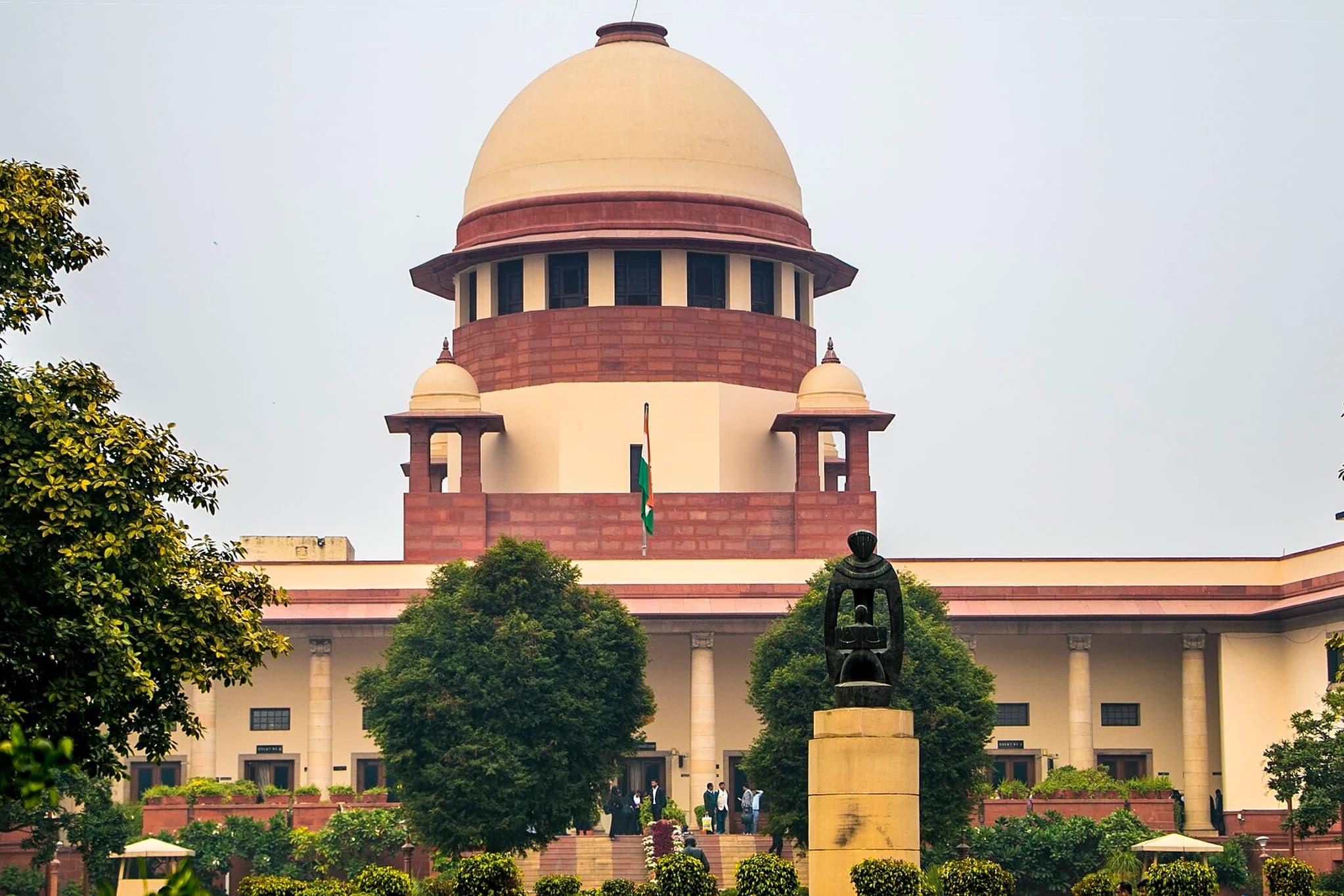
The rules define a foreign lawyer as anyone authorised to practise law under the regulatory framework of a foreign country (Rule 2(iii)), and say a foreign lawyer may not practise in India unless registered with the BCI (Rule 3). A registered foreign lawyer works "in non-litigious matters only", limited to foreign and international law (Rule 8). Source: Gazette of India, Bar Council of India notification of 13 May 2025.
| Work | Allowed | The rule |
|---|---|---|
| Advice and opinions on English law, other foreign law and international law | Yes, once registered | Rule 8: non-litigious matters only. |
| Transactional corporate work: joint ventures, mergers and acquisitions, intellectual property, contracts | Yes, once registered | Rule 8: on a reciprocal basis. |
| Representing clients in international arbitration conducted in India | Yes, once registered | Rule 8. |
| Advising clients in India on short visits, without registering | Yes, within limits | Fly-in, fly-out (Rules 3 and 8): foreign or international law only, no office or regular presence in India, no more than 60 days in any 12 months, with a declaration and a fee. |
| Appearing before Indian courts, tribunals or statutory and regulatory authorities | No | Rule 8(2), unless the BCI or the rules permit it. |
| Conveyancing and title investigation | No | Rule 8(2). |
| Drafting or filing documents for proceedings in Indian courts or tribunals | No | Rule 8(2). |
| Practising Indian law in any form | No | Rule 4(k): every applicant gives an undertaking not to. |
What registration costs
- Individual registrationUSD 15,000 (or the equivalent fee in the home jurisdiction if that is higher), a refundable security deposit of USD 10,000 and a non-refundable process charge of USD 2,000 for each application. Registration lasts five years, and renewal is USD 8,000.
- Fly-in, fly-out declarationUSD 3,000, plus a refundable deposit of USD 5,000.
- Paperworka no-objection certificate from the Government of India, certificates from your home regulator that you are entitled to practise and in good standing, and a certificate of reciprocity showing that Indian advocates may practise in that country on comparable terms.
If you are an enrolled Indian advocate as well
This is the stronger position. Rule 2(iv)(b) says an Indian advocate who also registers as a foreign lawyer keeps all the rights of an advocate, including litigation in Indian courts, and adds non-litigious foreign-law, international-law and arbitration work. Such an applicant must show enrolment and at least five years of active practice (Rule 4(p)), and is spared several of the certificates asked of foreign applicants. Rule 9(vi) says Indian lawyers may work as employees, consultants or advisers in foreign law firms abroad without registering at all. The notification’s Objects and Reasons record "an established pathway for Indian advocates to requalify in England and Wales" through the SQE.
Indian enrolment, UK law degrees and the London external LLB
The SRA and the Bar Council of India ask different questions about your degree. The SRA asks for a degree in any subject. The BCI recognises a limited list of foreign law degrees, and no external ones.
- The Indian routeAn LLB from an institution the BCI recognises, enrolment as an advocate with a State Bar Council, then the All India Bar Examination to obtain the certificate of practice. For the current format and dates, use the Bar Council of India’s AIBE page.
- For the SRA, any degree countsIt accepts a degree in any subject that is shown to be equivalent to a UK degree. An Indian degree is checked through mySRA by the SRA’s provider, Atlantic Data, for £54.84, and you can sit the SQE before that is done. Source: SRA, degree or equivalent.
- For the BCI, a UK degree counts only if it is on the listThe BCI’s list of recognised foreign law degrees, in the version dated 26 August 2020, has 46 United Kingdom entries. Recognition applies only to a regular law course in the 10+2+3+3 or 10+2+5 pattern: a three-year LLB after a three-year first degree, a three-year LLB followed immediately by the LPC or BVC and then a two-year law-firm contract or a year of pupillage, or a four-year joint LLB followed by the LPC, the BVC or a master’s in law.
- External degrees are outThe list states that no diplomas, two-year law degrees or external degrees from these universities are allowed. For London University it recognises the external LLB only if it was obtained before February 1990 (the list gives 10 and 11 February 1990).
- A recognised foreign degree still means an examIndian nationals who hold one must pass the BCI’s Qualifying Examination for Indian Nationals Holding Foreign Law Degrees. The 23rd sitting ran from 15 to 20 December 2025 in New Delhi: six written papers of three hours and 100 marks each, with a pass mark of 45 in every paper.
Sources: Bar Council of India, foreign universities whose law degrees are recognised and Bar Council of India, 23rd qualifying examination.
That is why this page is mainly for enrolled advocates and for graduates of Indian or BCI-recognised degrees. A holder of the University of London external LLB can still work towards the English qualification: the SRA asks for a degree in any subject, does not name the London LLB, and validates it through mySRA like any other degree. What that degree does not do is lead to enrolment as an advocate in India. The university’s own teaching-centre finder for the LLB lists no centre in India. Our guide to the SQE after the University of London LLB covers that route.
Many Indian candidates start from a UK campus instead: India sent 94,955 new students to UK higher education in 2024/25, more than any other country, across all subjects (Migration Observatory, University of Oxford, from HESA figures). If that is you, read the SQE for international students in the UK.
Paying from India: the RBI e-mandate rule and TCS
SQE assessment fees are single card payments in pounds, made in full at booking. A monthly course plan is a recurring card payment, and the Reserve Bank of India has rules for those.
Recurring card payments: the e-mandate framework
- The RBI’s Digital Payments E-mandate Framework, 2026, dated 21 April 2026, applies to recurring transactions on cards, prepaid instruments and UPI, "domestic or cross-border".
- A mandate is registered only after additional factor authentication, so expect to authenticate the first payment.
- A recurring debit of up to ₹15,000 may go through without further authentication. Above that, each debit needs it again.
- Your card issuer must send a pre-debit notification at least 24 hours before each charge, and give you a way to opt out of that transaction or of the mandate.
- The issuer may not charge you for the e-mandate facility.
The Directions have no clause about merchants outside India, and the RBI does not say how a particular bank’s e-mandate system will handle a UK merchant. That is a question for your card issuer. Whether a monthly plan falls above or below ₹15,000 depends on the plan and on the exchange rate on the day: the cost table below gives a guide figure in rupees. Source: Reserve Bank of India, e-mandate framework 2026.
Tax collected at source on money sent abroad
From 1 April 2026, tax collected at source (TCS) on remittances under the Liberalised Remittance Scheme applies only to amounts above ₹10 lakh in aggregate in a financial year: 2% where the purpose is education or medical treatment, and 20% for other purposes. The Budget for 2026-27 cut the education and medical rate from 5% to 2%. SQE fees and a course subscription are far below ₹10 lakh on their own, so on these thresholds TCS would arise only if your total remittances under the scheme in the year pass that figure. That is arithmetic on the official thresholds and not tax advice: how your bank classifies a card payment to a UK provider is for the bank and your tax adviser. Sources: Press Information Bureau, Budget 2026-27 and Union Budget, tax reform summary.
The SQE itself is paid for by debit or credit card through the SQE website, or with a prepaid voucher bought by an employer or training provider. There are no payment plans. Source: SQE payment methods.
What the SQE costs an Indian candidate, in rupees
The SQE cost page gives one fee in pounds for each assessment, with no separate figure for centres in India. An advocate who holds the SQE2 exemption pays for SQE1 and the £265 exemption application.
In pounds, with Indian rupeesINRPaid to the SRA, the same wherever you sit
- SQE1 assessment feeFLK1 and FLK2, paid to the SRA’s assessment provider when you book£2,006₹250,100
- SQE2 assessment feeWritten and oral, paid when you book SQE2£3,086₹384,700
- Both assessments£5,092₹634,800
Preparing with FQPS
- FQPS SQE1 RevisionA month, no minimum term, cancel anytime£79₹9,850
- FQPS SQE2 PreparationA month, includes 6 live 1:1 mocks with a solicitor£189₹23,600
SRA fees are for assessments from September 2026. FQPS prices include VAT. INR figures are a guide at the European Central Bank rate of 12 November 2026: you pay in pounds, and your card provider sets the final rate.
Preparing for SQE1 alongside practice in India
FQPS is online, so the course is the same in Delhi or Bengaluru as in London. What an Indian advocate has to add is the law itself: SQE1 tests the law of England and Wales, and the SRA has found no other legal system close enough to it for an exemption.
Start free, from anywhere
One full FLK1 and one full FLK2 mock (2 × 85 questions each, January 2027 format), free on sign-up with no card.
Create a free account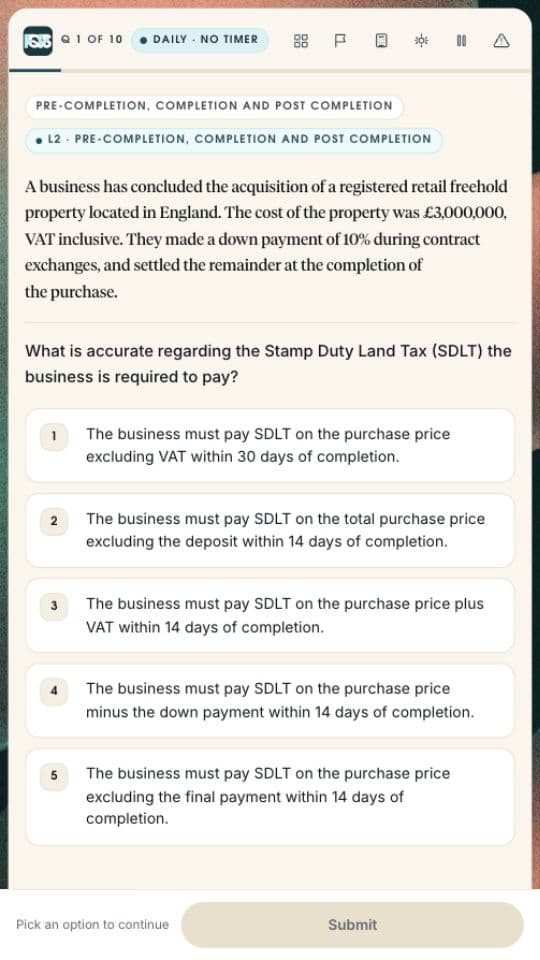
Study at your own hours
Revision cards for the whole SQE1 syllabus, 2,500+ practice questions, flashcards and full FLK1 and FLK2 mocks are there whenever you open the platform, on the web and in the mobile app.
The SQE1 courseA mentor who knows your route
Every paid plan includes a designated mentor and a personal study plan from Cleo, the FQPS study planner, built around your exam date.
How the mentor worksEnglish law, from the start
The SRA says the law of England and Wales differs significantly from that of every jurisdiction it has reviewed, including those based on English law. Plan to learn the syllabus, not to top up what you know.
What FLK1 coversSQE2 practice before the UK trip
If you sit SQE2, the SQE2 plans include live 1:1 mocks with a qualified solicitor, covering the oral and the written stations, with written feedback.
The SQE2 courseMonthly, with no minimum term
Plans are billed monthly in pounds and can be cancelled at any time, so you pay for the months you study. See the note on RBI e-mandate rules above.
Plans and pricesSQE1 preparation from £79 a month
5 plans, billed monthly with no minimum term. In your currency, that first plan is £79 a month.
A UK course with students well beyond the UK
FQPS is online from the first revision card to the last mock, so where you live changes your time zone and nothing else.
- 29
- countries our paying students’ cards were issued in, in the 12 months to November 2026
- 44%
- of those students paid with a card issued outside the UK
Lit: the UK and 14 of the other countries, among them France, United States, Singapore, Germany, South Korea, Türkiye.
Seven months of prep was plenty, and audiobooks made studying actually enjoyable.
 ClemenceNetherlands, read the review on Trustpilot
I received my results a few weeks ago and am thrilled to share that I passed!
 MarceauxMalaysia, read the review on Trustpilot
Honestly, it is value for money.
 Yosheel Bala BangarooCanada, read the review on Trustpilot
These are three of our reviews, chosen because the reviewers are outside the UK. Read every FQPS review on Trustpilot, good and bad. Country counts are from our payment records on .
When the SQE is the wrong route for an Indian lawyer
We would rather you chose the right route than our course.
- You want to practise Indian law or appear in Indian courts. The English title gives neither. That needs enrolment with a State Bar Council and the All India Bar Examination.
- You plan to advise on English law from inside India and have not counted the cost. Registration as a foreign lawyer is USD 15,000 plus a USD 10,000 refundable deposit and a Government of India no-objection certificate, and the alternative is a declaration that limits you to 60 days in any 12 months.
- You hold a University of London external LLB and hope the SQE will lead to enrolment as an advocate. The Bar Council of India does not recognise external degrees, and its list does not mention the SQE.
- You are counting on exemptions. There is no SQE1 exemption in practice, and the SQE2 exemption is an individual application that costs £265, asks for the AIBE and two years of practice, and can be refused.
- You expect practice experience to carry you through SQE1. In the SQE annual report for 2024/25, 45% of qualified lawyers passed SQE1 against 54% of other candidates, and candidates whose first language is not English passed SQE2 at 71% against 84%.
- You want to advise on Indian law in London. The Gazette notification records the UK delegation’s position that Indian lawyers can establish in England and Wales, practise Indian and international law, and advise on English law outside the six reserved activities. If that is the work, you may not need the English title.
Indian lawyers and the SQE: common questions
Your situation not here? A free 30-minute call with our team goes through your route and your dates.
Book a free callCan Indian lawyers get an exemption from the SQE?
From SQE2, possibly. The SRA has no agreed exemption for India, but an Indian advocate can apply for an individual SQE2 exemption with a reference showing at least two years of legal work since qualifying. SQE1 has to be sat: the SRA says it has granted one SQE1 exemption to any lawyer since 2021.
Which cities in India have SQE exam centres?
Bangalore, Chennai, Gurugram, Hyderabad, Mumbai and New Delhi are on the SRA’s list of cities for SQE1 and the SQE2 written assessments, read on 12 November 2026. The SRA describes the list as illustrative, and the cities for each sitting are confirmed when booking opens.
Do I need to have passed the AIBE to apply for an SQE2 exemption?
Yes, unless your law degree was completed before 2010. The SRA asks an Indian advocate for proof of passing the All India Bar Examination and proof of professional qualification with the Bar. If the degree was completed before 2010, proof of professional qualification alone is accepted.
Can an English solicitor practise law in India?
Not Indian law. Under the Bar Council of India’s rules, gazetted on 13 May 2025, a registered foreign lawyer may do non-litigious work in foreign and international law and act in international arbitration, and may not appear in Indian courts or practise Indian law. An Indian advocate who is also an English solicitor keeps the rights of an advocate.
Is a UK law degree valid in India?
Only some are. The Bar Council of India recognises regular law degrees from the UK universities on its published list, on conditions about the course and what follows it. It does not allow external degrees, diplomas or two-year law degrees, and Indian nationals with a recognised foreign degree must also pass the Bar Council’s qualifying examination.
What is the eligibility for the SQE exam for Indian students?
The SRA asks for a degree in any subject or an equivalent qualification, passes in SQE1 and SQE2, two years of qualifying work experience, and its character and suitability checks. You do not need the degree to sit the exams, only to be admitted. None of the SRA’s admission requirements is about nationality or where you live.
How much does the SQE cost in India?
The fees are set in pounds: £2,006 for SQE1 and £3,086 for SQE2 for assessments from September 2026, paid in full by card when you book. The SQE cost page shows no separate fee for international centres. An exemption application to the SRA costs £265.
Can I do my qualifying work experience in India?
Yes. The SRA says qualifying work experience can be gained overseas and need not cover English and Welsh law, but it has to be confirmed by a solicitor of England and Wales or a compliance officer for legal practice. An enrolled Indian advocate does not need it at all, because qualified lawyers are exempt from the requirement.
Do RBI e-mandate rules apply to a UK course subscription paid by Indian card?
The RBI’s e-mandate framework of 2026 applies to recurring card transactions whether domestic or cross-border. Registering the mandate needs additional factor authentication, each recurring debit above ₹15,000 needs it again, and the issuer must notify you at least 24 hours before each debit. The Directions have no clause about overseas merchants, so ask your bank how it handles one.
Other routes to the English title
 SQE in the UAE and the GulfSit in Dubai, Abu Dhabi or Riyadh, see how the SRA treats Gulf qualifications, and what Dubai and the DIFC Courts ask of an English solicitor.SQE after a University of London LLBWhat each country’s regulator does with the external LLB, and where you can sit the SQE from there.SQE for international studentsStudying in the UK on a visa: the Graduate visa against two years of QWE, non-law degrees, and finishing from home.All 15 international guidesWhere you can sit, what has to be done in the UK, and a guide for each country.
Sources for this page (29)
- SRA: SQE exemptions by jurisdiction
- SRA: applying for an SQE2 exemption
- SRA: applying for an SQE1 exemption
- SRA: SQE exemptions, questions and answers
- SRA: English or Welsh language proficiency
- SRA: qualified lawyers
- SRA: admission of qualified lawyers
- SRA: the SQE route
- SRA: degree or equivalent
- SRA: qualifying work experience
- SQE: SQE1 and SQE2 written locations
- SQE: assessment locations
- SQE: SQE2 oral locations
- SQE: SQE2 assessment days
- SQE: booking windows
- SQE: ID requirements
- SQE: costs and fees
- SQE: payment methods
- SQE: annual report 2024/25
- GOV.UK: Standard Visitor
- Gazette of India: Bar Council of India rules on foreign lawyers, 13 May 2025
- Bar Council of India: All India Bar Examination
- Bar Council of India: foreign universities whose law degrees are recognised
- Bar Council of India: 23rd qualifying examination for foreign law degree holders
- Reserve Bank of India: Digital Payments E-mandate Framework, 2026
- Press Information Bureau: Budget 2026-27, tax collected at source
- Union Budget 2026-27: tax reform summary
- University of London: LLB course page and teaching-centre finder
- Migration Observatory, University of Oxford: new international students 2024/25
Each source was read on or before 12 November 2026. Rules change: check the regulator's own page before you act on anything here. This page is general information, not legal or immigration advice. FQPS Academy is an independent SQE preparation provider, not affiliated with or endorsed by the Solicitors Regulation Authority or Kaplan. The SQE and SOLICITORS QUALIFYING EXAMINATION trade marks are the property of and are used under licence from the Solicitors Regulation Authority.