October 2026 SQE2 Joining Instructions: Dates & Checklist
Last updated: 16 October 2026. Checked against the SRA news item of 15 October 2026 and the SRA's SQE2 assessment days page.
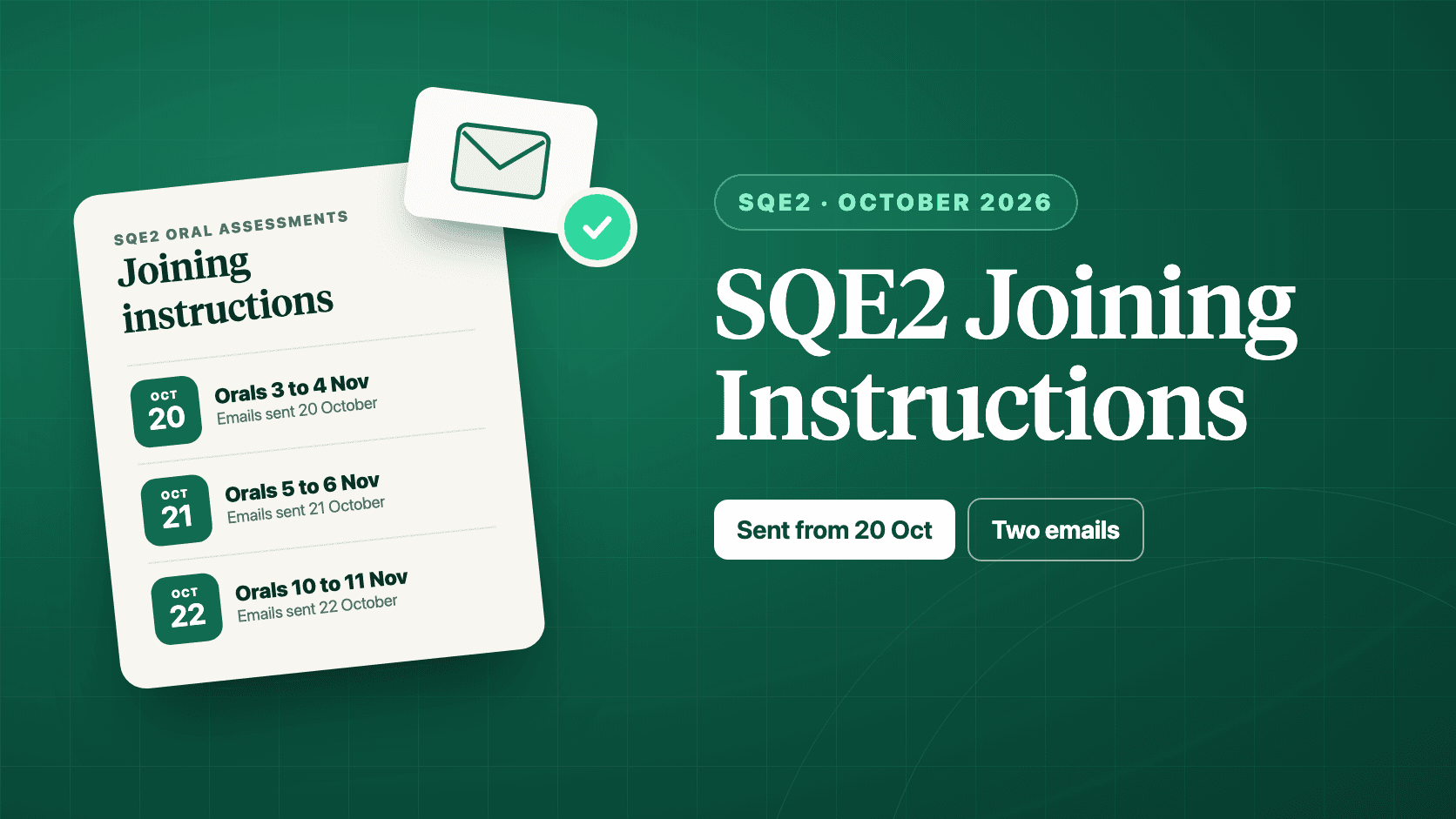
The SRA has confirmed that joining instructions for the October 2026 SQE2 will be emailed to candidates from 20 October 2026. The day yours arrives depends on your oral assessment dates. Here is the schedule, what the emails contain, and what to check in the fortnight before you sit.
- Sent from: 20 October 2026 (20, 21 or 22 October, depending on your oral dates).
- Two emails: one for your oral assessments, one for your written assessments.
- Oral email contains: your report time, a candidate guidelines document and the structure of the orals.
- Cannot find them? Check junk and spam, then contact the SQE Candidate Services Team.
- Late arrivals: if you are late, you cannot enter the assessment.
When will you get your SQE2 joining instructions?
| Your oral assessment dates | Joining instructions sent |
|---|---|
| 3 to 4 November 2026 | 20 October 2026 |
| 5 to 6 November 2026 | 21 October 2026 |
| 10 to 11 November 2026 | 22 October 2026 |
That is roughly two weeks before your oral assessments, in line with the SRA's guidance that oral joining instructions arrive approximately two weeks ahead.
Source: SRA, October 2026 SQE2 joining instructions, 15 October 2026.
The two emails you should receive
1. Oral assessment joining instructions
According to the SRA, this email includes your report time at the assessment centre, a candidate guidelines document, and details of the structure of the SQE2 oral assessments.
2. Written assessment joining instructions
This one is a reminder of the information in your original booking confirmation email, so it should hold no surprises. If anything differs from your booking confirmation, contact Candidate Services straight away.
Check your junk and spam folders. If the emails are still missing, contact the SQE Candidate Services Team rather than waiting.
Why your report time matters
The SRA is clear that if you are late you cannot enter the assessment, so your report time is the first thing to read.
Each oral assessment day runs between 8am and 8pm, and you attend for between 4.5 and 7 hours within that window. To offer more places, some candidates are randomly allocated a later report time of 12:35 or 12:40 and wait in a supervised area for about three hours before starting. If that is you, your joining instructions will say so, and it applies to both oral days.
If you have a 12:35 or 12:40 report time
- You will be at the centre for around seven hours and cannot be released early.
- If you leave, you will not be allowed back in.
- You can bring paper notes, books and magazines, but no phones, laptops or Bluetooth headphones.
- You cannot buy food during the wait, so bring a cold lunch. Light refreshments are provided.
- If this timetabling does not work for you because of a disability or other condition, the SRA says to apply for a reasonable adjustment as soon as possible.
Source: SRA, SQE2 assessment days, read 16 October 2026.
Your fortnight-before checklist
- Look for both emails on the date in the table. Search your inbox for "SQE" and check spam and junk.
- Note your oral report time and put it in your calendar for both days.
- Plan travel for the whole day. You cannot leave early, and the SRA advises that if in doubt you travel the day after your orals finish.
- Read the candidate guidelines document attached to the oral email.
- Check your ID. You must show ID and pass security checks on each day.
- Pack for the day. A small bag, business clothing, and a warm layer you can remove easily. You are given a calculator, black pen, writing paper and highlighter.
- Re-read your written booking confirmation and compare it with the written joining email.
- Confirm any reasonable adjustments are recorded. Medical or religious declarations, such as for security wanding, had to be made by the booking closing deadline.
What the SQE2 oral assessment day looks like
- You register, verify your ID, pass security checks, sign a Fit to Sit declaration and collect an ID badge to wear all day.
- You get preparation time in a preparation room, then an exam marshal escorts you to your assessment room.
- After the client interview you go to a base room to complete the attendance note or legal analysis by hand.
- You are expected to stand for the criminal litigation advocacy assessment, subject to any agreed reasonable adjustments.
- You do not need to shake hands with the examiner playing the client.
- Advocacy is assessed by experienced solicitors and interviewing by trained actors.
- The assessment is about two hours a day, but registration, security and moving groups between rooms mean there will be waiting. That is normal.
What the SQE2 written assessment days look like
- There are 12 written assessments over three days, four per day.
- Each day has two sessions: 1 hour 30 minutes, a 15 minute break, then 1 hour 45 minutes.
- They are computer based at Pearson VUE centres. No water, phones or watches in the room, and you cannot leave early.
- Unscheduled breaks, for water or the bathroom, do not stop the timer.
- Your start time is the same on all three days.
Using the last two weeks well
With logistics sorted, spend the time on what helps you perform. Do timed practice on your weakest stations, especially handwritten attendance notes and legal analysis under time pressure. Practise advocacy on your feet and out loud. Rehearse your day, from wake time and travel to food and a calm routine for any waiting period. And rest properly before each day: the SRA itself describes SQE2 as a rigorous assessment of a length many candidates will not have met before.
Practise every SQE2 station before November
FQPS SQE2 Preparation gives you 6 live 1:1 mocks a month with a solicitor and written feedback, plus a personal study plan. £189 a month, no minimum term.
SQE2 joining instructions: FAQ
When are the October 2026 SQE2 joining instructions sent?
From 20 October 2026. Candidates with oral assessments on 3 to 4 November get theirs on 20 October, those on 5 to 6 November on 21 October, and those on 10 to 11 November on 22 October.
How many emails will I get?
Two: one about your oral assessments and one about your written assessments.
I have not received my joining instructions. What should I do?
Check your junk and spam folders first. If they are not there, contact the SQE Candidate Services Team.
What is in the oral joining instructions?
Your report time, a candidate guidelines document, and details of how the SQE2 oral assessments are structured.
What is in the written joining instructions?
A reminder of the information in your original booking confirmation email.
Can I turn up late to the SQE2?
No. The SRA says that if you are late you cannot enter the assessment.
Why might my report time be 12:35 or 12:40?
To offer more places, some oral candidates are randomly allocated a later report time and wait about three hours in a supervised area. Your joining instructions confirm it, and it applies to both oral days.
How long is the SQE2 oral assessment day?
You are typically at the centre for between 4.5 and 7 hours from your report time, although the assessment itself is about two hours a day.
Keep reading
General information, not legal advice. FQPS is not affiliated with or endorsed by the SRA or Kaplan. Check the official SQE website and your own emails for your dates and instructions. The SQE and SOLICITORS QUALIFYING EXAMINATION trade marks are the property of and are used under licence from the Solicitors Regulation Authority.
Stay up to date
Never miss the latest SRA updates. Receive product updates, news and customer stories right into your inbox.

Keep reading
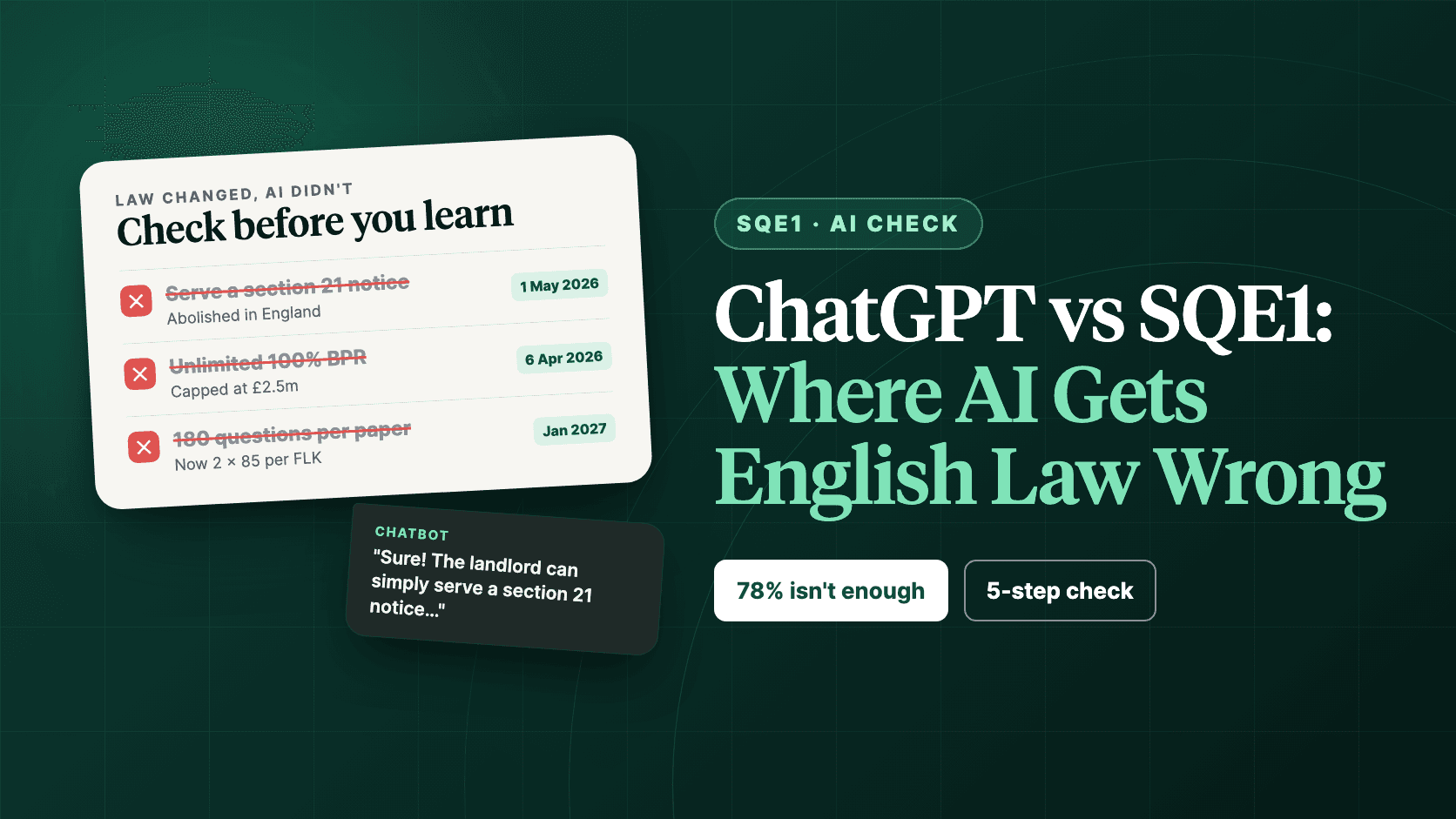
How ChatGPT has scored on SQE1 sample questions, the five ways AI gets English law wrong, recent changes to check, and a five-step routine for verifying any AI answer.
Read the article
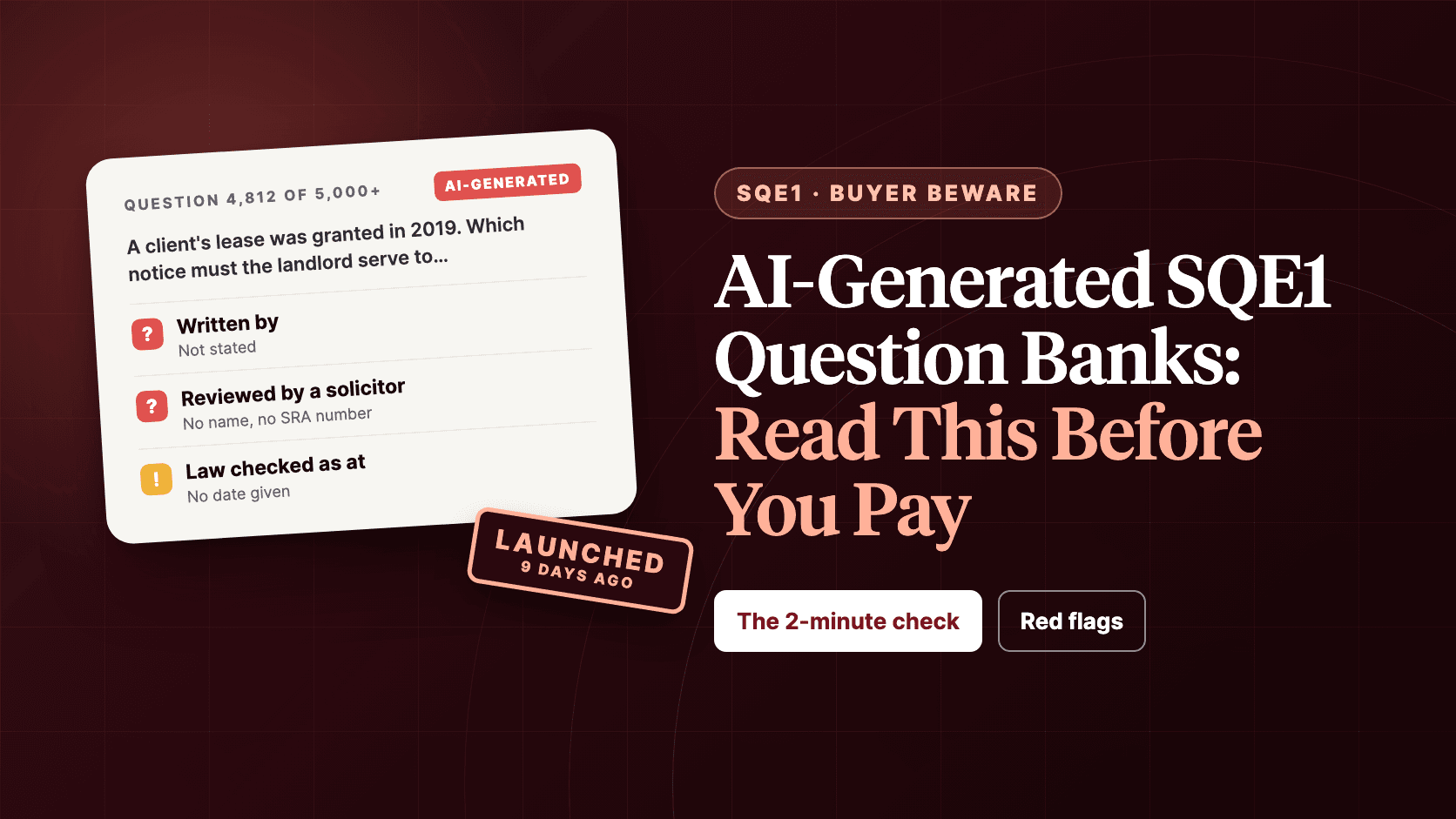
New AI SQE1 question banks appear every week. Why unreviewed AI questions are no better than a free chatbot, what the research shows, and a two-minute check before you buy.
Read the article
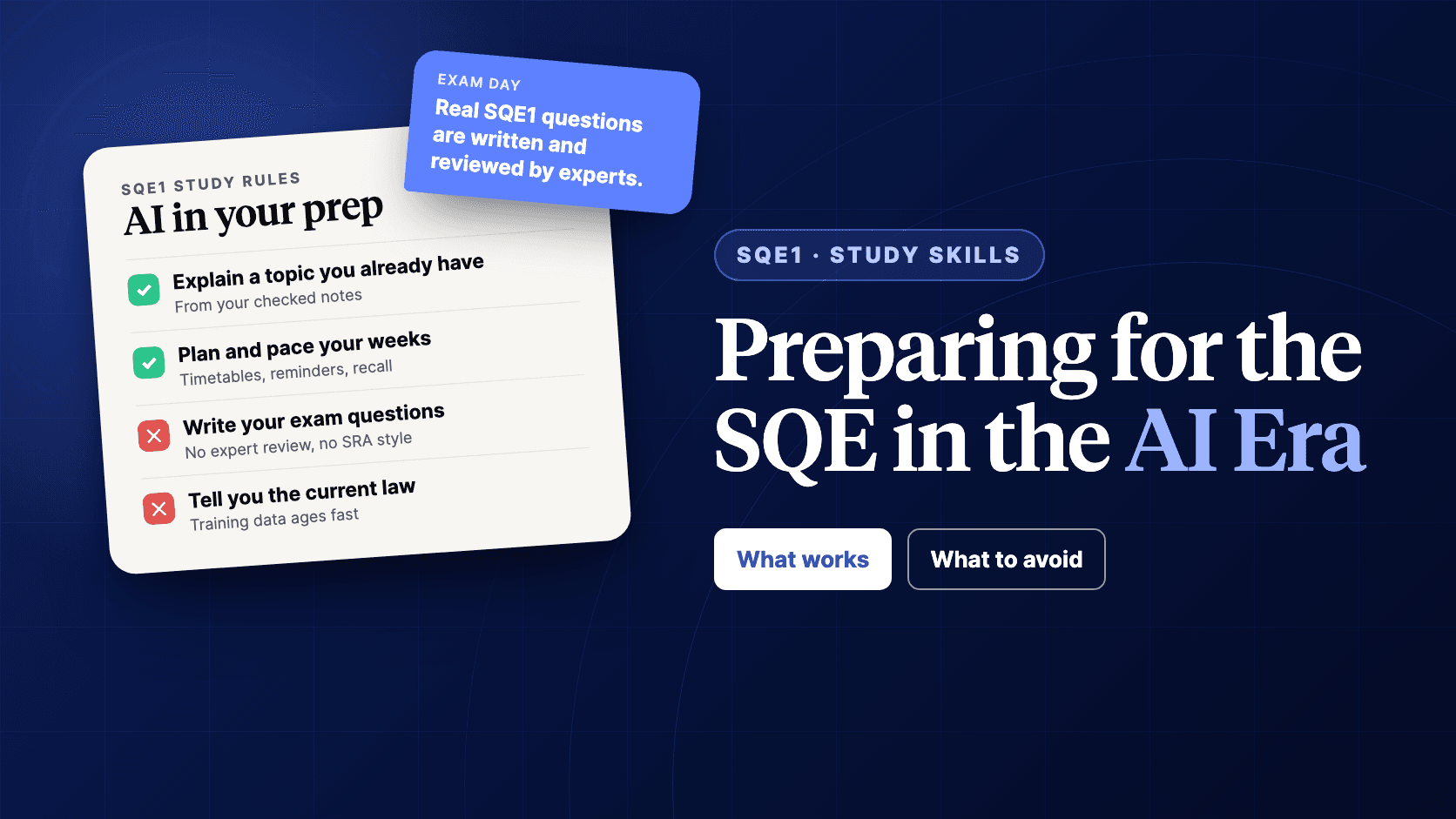
How to use AI in SQE preparation without being misled: what it does well, where it fails on English law, how real SQE1 questions are written, and 10 rules to follow.
Read the article